Apart from the massive strides Nestle's KitKat brand has made in working towards a circular economy model for packaging, it has also pledged to become carbon neutral by 2025.

The pledge will see Nestle globally aiming to reduce emissions generated through ingredient sourcing, manufacturing and distribution for KitKat by more than 50 per cent.
As most emissions occur when producing KitKat’s ingredients like cocoa and milk, the brand’s efforts to restore forests, and support a transition to regenerative agriculture will aim to reduce these emissions as much as possible.
Nestle will invest in high quality offsetting based on natural climate solutions for any emissions that cannot be eliminated.
Nestle's KitKat is working with global climate change and sustainability consultancy, The Carbon Trust, to measure the brand’s current carbon footprint. This process will be completed later this year.
Accelerating the transition to renewable electricity
Nestle says it is working to improve the environmental footprint of its kitKat factories. It has already reduced the energy required to produce KitKat by more than 40 per cent per tonne of product since 2000.
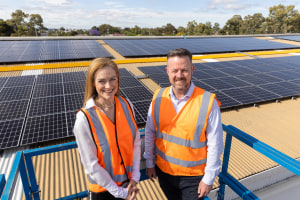
Nestle is using renewable electricity at an increasing number of manufacturing sites and will use 100 per cent renewable electricity at all KitKat factories before the end of 2025. In Australia, the KitKat factory in Melbourne is now working toward using 100 per cent renewable electricity, as well as continuing initiatives to reduce its impact by reducing waste to landfill and energy use.
Building on more than a decade of action
Nestle has a history of improving the sustainability of its KitKat supply chain that dates back more than a decade.
In 2009, Nestle launched its Cocoa Plan, sourcing 100 per cent of the cocoa used for KitKat in Australia in 2013, and 100 per cent of the cocoa used for KitKat globally since 2016. Nestle has planted more than 15 million cocoa trees and invested more than $420 million in cocoa sustainability as part of this work.
The new KitKat carbon neutral pledge complements the company’s ongoing efforts to reduce its environmental footprint further.
Nestlé is committed to reaching net zero emissions everywhere by no later than 2050 throughout its value chain.
Recently, Nestle joined a coalition of companies with a shared vision to close the loop on soft plastics and have produced Australia’s first ever soft plastic food wrapper made with recycled content for its KitKat brand of chocolate bars.
Nestle ranked in at #11 in Australia's Top 100 Food & Drink Companies 2020 report.