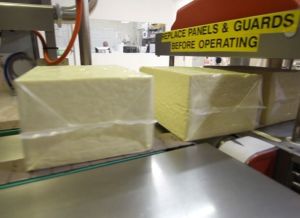
• The company expects output of 45,000MT of cheeses each year – an increase of 15,000MT on the previous plant.
    The company expects output of 45,000MT of cheeses each year – an increase of 15,000MT on the previous plant.
Close×

Fonterra Australia is building a state-of-the-art cheese plant at its Stanhope factory to replace the plant that was destroyed by fire in December 2014.

The new NZ$141 million plant will be larger, and will be able to produce 45,000MT of cheeses each year including parmesan, gouda and mozzarella, an increase of 15,000MT on the previous plant.
The new plant will help Fonterra to deliver on its multi-hub strategy to get the maximum value out of every drop of milk and drive increased returns from the business, according to Fonterra Oceania MD Judith Swales.

“Today’s announcement is strategy in action, where we are delivering on our strategic plan to transform our Australian business and return it to strong and sustainable profitability,” she said.

“As the branded market leader in the A$1.95 billion retail cheese category, with Bega, Mainland and Perfect Italiano commanding 23 per cent market share, the new plant will supply our Australian consumer and foodservice businesses, and export markets.

“The new cheese plant is an important part of our multi-hub strategy, which sees our Australian business play to its ingredients strengths in cheese, whey and nutritionals complemented by our consumer and foodservice businesses. It will provide whey to our Darnum and Dennington plants, which are at the core of our growing Australian nutritionals business.”

Packaging News

PulPac has signed Australian packaging company Zipform Packaging as a licensee of its Dry Molded Fiber technology, to accelerate the development of fibre-based solutions for food packaging applications.

Following a rigorous two-stage judging process, finalists in the 2026 Women in Packaging Awards have been selected, reflecting the depth of talent, leadership and innovation shaping Australasia’s packaging sector.

Australia’s plastic packaging industry bracing for prolonged disruption, as conflict in the Middle East continues to drive sharp increases in resin costs, freight rates and supply uncertainty.