Read more
Independent beverage solutions provider, Refresco, has signed a 10-year prelease for the 25,500 square metre ground floor of Gateway Capital’s new multi-level industrial facility in Revesby, Sydney. Read more
Boeing has unveiled the F-15 Silent Eagle (F-15SE), a new semi-stealthy F-15 configuration designed to meet the anticipated needs of international customers for cost-effective stealth technologies, as well as for large and diverse weapons payloads.
Four successful Capability & Technology Demonstrator (CTD) projects are to have their development fast-tracked, the Minister for Defence Science and Personnel, Warren Snowdon MP, has announced.
Four Aegis SPY-1D(V) radar antennas destined for the RAN's first Hobart-class Air Warfare Destroyer have been installed in Lockheed Martin's Aegis Production Test Center at Moorestown, New Jersey, marking the full system's transition from production to testing.
The Department of Defence and Thales Netherlands have signed a contract for a user licence of Thales's Mid-Course Guidance and Sampled Data Homing fire control function.
Boeing has begun fitting the outer skin of the first RAAF F/A-18F Super Hornet to its forward fuselage on the assembly line in St. Louis.
The DMO, Lockheed Martin and Australian Aerospace signed the $292 million, five-year Through Life Support services contract for the RAAF’s C-130J Hercules fleet during the Australian International Air Show at Avalon in March. Australian Aerospace will be prime contractor with Lockheed Martin as a sub-contractor and most of the work will be carried out at the Hercules’ home base, RAAF Richmond, NSW. DMO’s Head Aerospace Division, Air Vice-Marshal, Colin Thorne said the contract offered the best value for money for Defence and the Australian taxpayer. “This contract will provide innovative solutions to C-130J maintenance and is designed to reduce the cost of ownership into the future. The DMO, RAAF, Australian Aerospace and Lockheed Martin will work closely in order to provide ongoing support to the C-130J aircraft fleet, thereby increasing availability to the Air Force.” The five-year performance-based contract links annual contract extensions to contractor performance and cost reduction, thereby promoting efficiency and delivering real cost savings. Subject to contractor performance, support of C-130J aircraft will continue under this contracting strategy until the fleet’s planned withdrawal date. This contract will create over 80 additional industry jobs in the Sydney/Richmond area over the next twelve months, Thorne said. Australian Aerospace already carries out deep maintenance of the RAAF’s AP-3C Orions at Richmond. As part of the Hercules contract, Australian Aerospace and Lockheed Martin will deliver services including aircraft maintenance, engineering and supply chain management. C-130J engine support will continue to be provided by StandardAero under an existing contract arrangement.
Four companies have been shortlisted to tender for the electronic warfare (EW) element of the air warfare program (AWD), and the surprise is not so much about who is included in the list, as about who is not. Julian Kerr Sydney The restricted Request for Tender (RFT), released on 20 March and closing on 20 May, was issued to Indra Sistemas AS of Spain, Elisra Electronic Systems of Israel, Thales Australia, and ITT Corporation of the US. The surprise exclusion was BAE Systems Australia, which retains the domestic defence industry’s strongest EW capability. ADM understands that the Commonwealth was seeking an off-the-shelf product with no developmental requirements, a specification the company could not meet. BAE Systems had been expected to compete with PRISM 5, the latest development of its scaleable PRISM electronic support measures (ESM) series which already equips the Royal Australian Navy’s (RAN’s) Armidale class patrol boats and Huon class minehunters. Another unexpected exclusion was Rafael, whose C-Pearl ESM system aboard the RAN’s upgraded Adelaide class FFGs is now reported to be performing well after the resolution of a number of hardware, software and operator training issues. Nearly all the major contracts for the $8 billion AWD program have already been let, but John Gallacher, CEO of the AWD Alliance grouping the Defence Materiel Organisation, ASC and Raytheon Australia, said late last year that selection of the EW suite would be delayed for as long as possible to benefit from technical developments. The insistence on a fully-developed product, albeit one capable of further enhancement, reflects the determination of the Alliance to meet or to improve on its delivery schedule. The first of the three Hobart class AWDs is scheduled for delivery to the RAN in December 2014 , the second in early 2016 and the last ship in June 2017. Given Defence’s determination to move towards aligning EW capability on major fleet units, whatever EW system is selected for the Hobart class seems likely to also be chosen for the two Canberra class Landing Helicopter dock (LHD) amphibious ships, although EW tenders have yet to be called for that program. LHD EW The question here is whether the LHDs will receive a full EW suite, or be fitted with a smaller subset and expect to rely to some extent on the protective capabilities of accompanying AWDs or FFGs. The increased focus on operating in the littoral environment has added to the complexity of ESM requirements, given the presence of multiple non-military signals, multipathing, and signal reflections. Littoral operations also carry the possibility of additional threats from weaponry normally used only in the land domain, making laser missile warners a possible option for future platforms. A further complication is an increasing awareness of the need to fully integrate EW systems with self-protection assets such as the Evolved Sea Sparrow Missile (ESSM), recognising that timelines for hard-kill defence against supersonic anti-ship missiles may make human-in-the-loop procedures impractical. Supersonic terminal phase weapons such as the SS-N-22 Sunburn, the Novator 3m-54E Alfa and the Yahont/BrahMos family present a serious challenge to shipboard defensive weapons, particularly when fired in salvo. It is not yet clear whether the AWD EW fit will involve an EW system integrated within its own domain but with an interface to the Aegis Weapons System (AWS) contained within the Aegis Combat System, or whether it will consist of disparate EW elements interfacing to the AWS. Considerable work has been directed by DMO via the Capability Technology Demonstrator (CTD) program towards establishing an EW open architecture (OA) standard which would allow a move away from proprietary interfaces towards the plug and play of EW equipment from different suppliers (see PXX for more). Although there has been no separate requirement for the design of such a standard as a precursor to the EW RFT, this does not mean it has not been requested within the RFT itself. Round 10 of the CTD program saw BAE Systems Australia, Tenix Defence (prior to its acquisition by BAE Systems), and Daronmont demonstrate the BAE Systems PRISM ultra wideband ESM system with roughly 100 per cent probability of intercept and wide frequency of coverage. Additional capabilities were then added via an open data interface, including specialist high accuracy receivers for high level direction finding, low probability of intercept receivers, an onboard electronic attack system based on a modern digital radio frequency memory, and a Nulka active decoy simulator. As threats evolve, open architecture will provide the ability to quickly add additional software-based assets to counter them, although RF blanking, suppression and interactions must still be configured and the physical integration of hardware will still be necessary. Future upgrades A current example of threats overtaking contractual requirements is the C-Pearl ESM aboard the FFGs. Although C-Pearl has met its contractual specifications it will almost certainly need to be upgraded to meet threats that were not contemplated at the time of contract signature. As pointed out by David Dunmall, EW Capability Development Manager at BAE Systems Australia: “The frequency ranges we used to deal with in the naval environment started off at 2 to 18 GHz. Then we moved down to 0.5 to 18 GHZ, but now the threats are ranging up to the 40 GHz region, and there are missile seeker heads at the 90-100 GHz mark. “Some household phones and wi-fi links are now 5.4 to 6 GHz – these were threat frequencies during the Cold War.” Madrid-based Indra produces the SLQ-380 ESM/Electronic Countermeasures (ECM) system, an export derivative of the Aldebaran system equipping the Spanish F-100 frigates on whose design the RAN’s AWDs are based. The SLQ-380 system is scaled through a series of building blocks, each adding incremental functionality. These comprise a simple threat-warner ESM using flat spiral antennas and a wide-open receiver; a more advanced ESM using 8-18GHz interferometer arrays for cueing of hard-kill or soft-kill systems; an electronic intelligence (ELINT) version which uses a spinning DF antenna and a superheterodyne receiver for narrow-band, fine grain emitter analysis; and electronic countermeasures (ECM) options for either steerable or more advanced multibeam jammers. However, Indra is linked with Grintek ewation of South Africa and EADS Germany through the so-called MRCM Alliance, and a separate option could involve the Maigret 5800 integrated EW system. This consists of the Maigret C 5800 communications electronic support (ES) subsystem with a frequency range of 10 kHz to 3000 MHz; the Maigret R 5800 radar ES subsystem extending from 2 to 18 GHz but capable of extension to 0.5-40 GHz; and the Maigret S 5800 command and evaluation element. The baseline ES capability can be extended into the communications (COMINT) and ELINT fields with a sensitivity of better than 80dBm. The Maigret system can fuse acquired communications and radar data into a single-tactical EW database in real time. Situational awareness information is displayed as either a tactical polar diagram and/or as a map. Automatic threat warning filters are used to classify received signals into threat/non threat categories, reducing operator workload and automating the surveillance process. All collected data is recorded and a shore-based post-mission analysis tool is available. Elisra’s NS9003A-V2/NS9025-V2 integrated naval ESM/ECM suite is fully integrable and interoperable with other on-board systems such as command and control, hard-kill/soft-kill assets, fire control systems and radars. The fourth-generation system, believed to be installed on the Israeli Navy’s Eilat-class missile corvettes, is said by Elisra to receive and identify over-the-horizon signals with 100 per cent probability of intercept. Instantaneous frequency and direction-finding measurements are performed on a per-pulse basis, while advanced signal-processing algorithms enable the system to operate in a dense electromagnetic environment. “Tailored” transmission techniques are used to counter each specific threat, and the ECM system architecture enables simultaneous engagement of multiple missiles as well as other threats. The system also provides a number of advanced tactical ELINT features such as frequency profile analysis, radar scan pattern analysis, and emitter signals video display. Thales Australia will be drawing on the experience and resources of its European parent in offering the Vigile ESM/ELINT system, which is designed around a modular architecture and can be tailored to individual customer requirements. The core Vigile 100 ESM system covers the 1-18 GHz band. Vigile 200 extends this down to 0.5 GHz and up to 40 GHz and adds plug-in low-band amplifiers for the existing antenna system, plus an additional four-port K-band antenna array. Vigile 300 adds a digital scanning receiver allowing detection of frequency-modulated and pulse-modulated continuous wave low probability of intercept radars, while Vigile 400 features high-accuracy direction-finding with a wideband interferometer array. The Vigile 200, 300 and 400 variants can all be given geo-location functionality, enabling a single platform operating entirely passively to generate precise target ranges and bearings. ITT Corporation, utilising the expertise of its wholly-owned EDO subsidiary, is proposing its ES-3701 ESM and Surveillance System. This operates in the 2-18 GHz range but can be extended to cover 0.5 to 40 GHz. The ES-3701 benefits from having been integrated with the Aegis combat system on the Norwegian Nansen-class frigates. It is also reportedly similar to the EDO 5600 system fitted in the Collins class submarines, but with different RF distribution sub-systems. The ES-3701 can track up to 500 signals simultaneously and is said to be accurate enough to provide over-the-horizon targeting for surface-to-surface missiles. The receiver unit houses phase DF and frequency measurement receivers with a variety of filters being used to remove interfering signals. The phase receiver combines digitised bearing angle, frequency, amplitude, time-of-arrival and pulsewidth values to create Pulse Descriptor Words (PDW). The ES-3701’s signal processor accepts the PDWs from the receiver unit and utilises signal-sorting software to identify the multiplicity of modes and sub-modes of any single radar, and then fuse them into a single track file. Specific algorithms are also implemented to eliminate multipathing and signal reflections before signal reports are passed to the operator workstation via an Ethernet local area network.
The decision to wire a dozen of the 24 Super Hornets on order from Boeing, to enable their future fitout as EA-18G ‘Growlers', is a far-sighted development which regional powers will note with some interest.
Shortly before this edition of ADM closed for press the Chief of Navy, Vice Admiral Russ Crane, released an unclassified version of Rear Admiral Rowan Moffitt's Submarine Workforce Sustainability Review.
The world of PPPs (Public Private Partnerships) and PFIs (Private Finance Initiatives) is bearing down on defence contracting around the globe.
US Secretary of Defence Robert Gates' proposal to cease production of the F-22 Raptor has received the backing of the US Air Force.
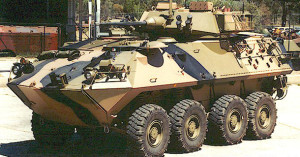
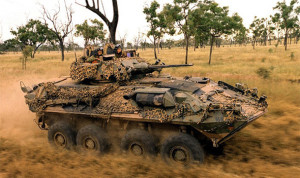
Saab Avitronics has offered Defence a system that provides full spectrum active protection for the ASLAV.
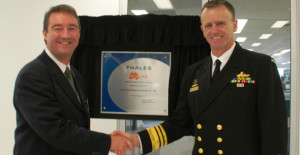
Thales Australia's Network Enabled Warfare Laboratory has officially been opened at Sydney's Garden Island.
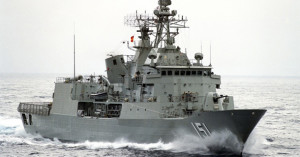
The ANZAC Frigates' Anti-Ship Missile Defence Upgrade is going full steam ahead with the announcement of further funding.
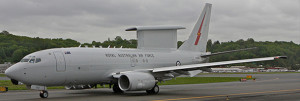
The General Manager of the DMO has signalled that the future of RAAF's Project Wedgetail is uncertain.
Based on systems developed for submarine and maritime surveillance applications, Acacia Research's acoustic shot location system is now being offered as a defensive aid to the ASLAV.