Woolworths' plastic bag phase-out catapulted the issue of sustainability into the spotlight. Now, other supermarket chains and a swag of fast food restaurants are following suit.
It all started in July last year. The country's largest supermarket chain, Woolworths, announced it would begin phasing out plastic bags at the checkout, as well as in Big W and BWS stores.
The company said there would be a total ban in place by 30 June, 2018.
On the same day, less than two hours later, Coles announced that it too would be phasing out single-use plastic bags over the next 12 months.
Now, Harris Farms Markets has moved in and beat the larger chains to to the punch, announcing this week that it is completely plastic bag-free at registers.
Harris Farm now encourages all its customers to #byobag or take a recycled box following its decision to eliminate any and all plastic bag options, unlike competitors who now offer them at a cost to consumers.
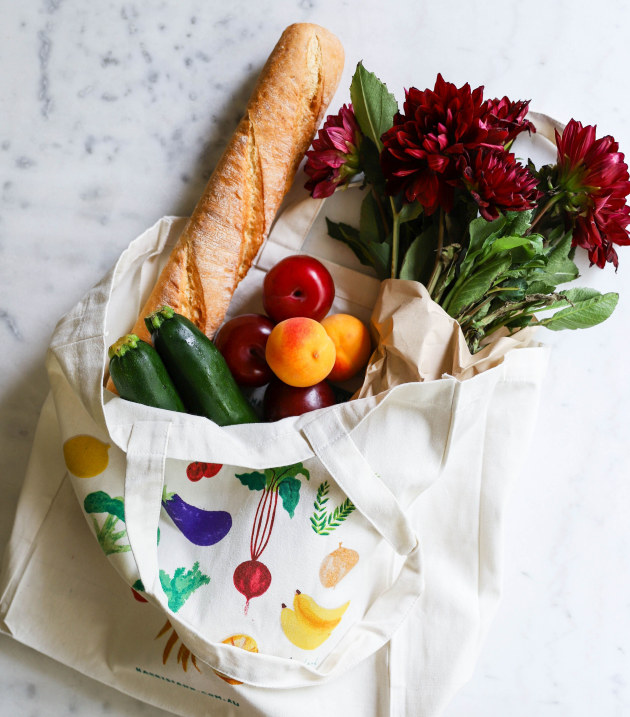
The grocer formerly partnered with Clean Up Australia on the issue, pushing for a statewide ban, and has had alternative carry bag options at the checkout for some time.
Following not far behind are Craveable Brands' chains Red Rooster, Oporto, and WA-based Chicken Treat, which have started to phase out single-use plastic bags in their restaurants.
With stock no longer being replenished, some will be plastic bag-free in the next month, with 100 per cent of the network onboard with #banthebag by July 2018.
Craveable Brands CEO Brett Houldin said he expected to see 8.8 million bags removed from circulation nationally, which is equivalent to 8.8 tonnes of plastic.
To support customers during the transitional period, Harris Farm stores have introduced free reusable paper bags, but continue to encourage customers to bring their own bags as the best possible environmental option.
On a larger scale, companies such as Unilever are addressing the issue of plastic waste from the point of view of the packaging materials used.
One year after Unilever made its commitment to ensure 100 per cent of its plastic packaging was fully reusable, recyclable or compostable by 2025, 10 companies had made similar pledges.
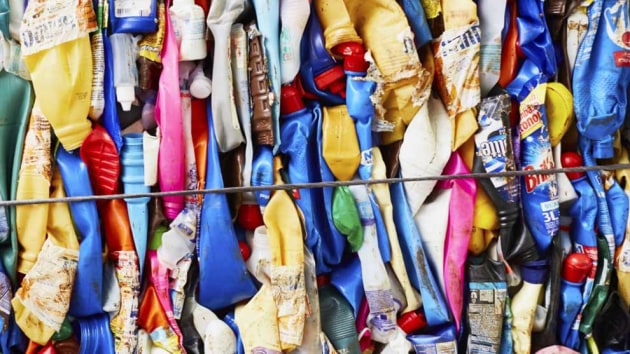
Unilever is leading a transition away from the linear take-make-dispose model of consumption, to one which is circular by design.
It has called for more organisations to address plastic leakage into the world’s natural systems including waterways and oceans.
Research by the Ellen MacArthur Foundation (EMF) found that the equivalent of one dumpster truck’s worth of plastic enters the oceans every minute, and by 2050 it forecasts there could be more plastic (by weight) in the ocean than fish.
Today, only 14 per cent of plastic packaging is collected for recycling.
Recycling in Australia is at crisis point, however, since the recent decision by China to ban foreign waste.
It announced a ban on 24 categories of solid waste last month, which affects an annual average of 619,000 tonnes of materials in Australia alone. Visy is believed to have stopped accepting materials for recycling.