• A new ad that links soft drinks and obesity has been created to coincide with a Melbourne forum to discuss policy options.
    A new ad that links soft drinks and obesity has been created to coincide with a Melbourne forum to discuss policy options.
Close×

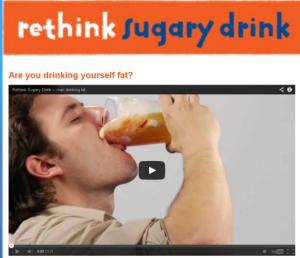
The Rethink Sugary Drink group has released an advertisement of a man drinking a glass of fat in its latest campaign against sugary drinks.

The group which is led by the Cancer Council, Diabetes Australia and the Heart Foundation of Australia released the new ad to coincide with a Melbourne forum of health lobbyists to discuss policy options including a tax on sugar-sweetened beverages.

In the advertisement, a man pours fat from a soft-drink can into a glass and then drinks it.

“Drinking one can of soft-drink a day... can make you 5kg fatter a year” can be read on the screen, as a large amount of fat lands on a dinner plate.

It ends with: “Don't drink yourself fat. Cut out soft drinks and other sugary drinks. Go with water or low fat milk instead.”

Australian Food and Grocery Council CEO, Gary Dawson, questioned the credibility of the ad. “Drinking a can of soft drink is not same as quaffing a beaker full of fat and if something is not credible, consumers are more likely to turn off,” he said.

He also said that soft drink was clearly not the only cause of obesity, so the ad was not backed by science or common sense.

“It's a misleading campaign,” he said. “My view is we need a bit less preaching and a bit more practical action and that involves a range of product choices, good information for consumers. Not this approach where a product is demonised.”

"The food and beverage industry is engaged in providing more choice through smaller portions, in low- or zero-kilojoule drinks and they fastest growing part of market.”

The Australian Beverages Council's CEO, Geoff Parker, said the Rethink Sugary Drink group, in its quest to solve obesity, continues to mislead the Australian public by singling out soft drinks.

“The beverage industry acknowledges the good work that these organisations have done in the past on a range of public health issues. But it believes it’s misguided to place such a singular focus on a small and declining part of the Australian diet. In fact, sugar consumption by Australian children through sugar sweetened beverages has decreased in recent years, while obesity continues to be a problem.”

A tax on sugar sweetened soft drinks won’t solve the country’s obesity problem, Parker said.

“Australian families can’t afford another tax on our supermarket trolley. A balanced diet, motivation and exercise are key to a healthy lifestyle, not a tax on sugar-sweetened soft drinks. Taxes don’t teach healthy lifestyles; if we want a healthier country, we need better education about exercise and balanced diets."

He also pointed to initiatives the industry had undertaken voluntarily, including clearly labelling the kilojoules on a per serve basis on the front label of cans and bottles, reformulating products to include a wide range of low-and no-kilojoule options, introducing new drink sizes such as mini cans, prohibiting marketing of sugar-sweetened beverages to children under 12 years, and restricting sales of sugar-sweetened soft drinks in primary schools in compliance with all relevant school canteen guidelines.

Packaging News

IVE Group says its diversification strategy – including investment in packaging capacity – remains central to growth despite softer revenues in traditional print segments.

The Hive Awards are live! PKN's sister title, Food & Drink Business, is calling on all processing and packaging innovators in the food and beverage sector to get on board and submit entries by 13 March.

A new AFGC snapshot of Australia’s food and grocery manufacturing sector highlights rising costs and slowing real growth – while calling for national progress on packaging circularity and digital labelling.