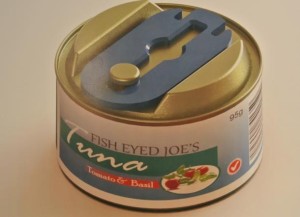
• A plastic sliding key could make make opening tuna cans far easier.
    A plastic sliding key could make make opening tuna cans far easier.
Close×

A plastic sliding key mechanism that is designed to make it easier to open tuna cans was selected from 20 finalists to win this year's Cormack Innovation Awards.

The awards, which are sponsored and organised by Cormack Packaging, seek entries from local tertiary packaging design students and this year entrants were briefed to produce packaging designs for people with accessibility constraints.

The winning tuna can design by Dominic See of the University of NSW was deemed by judges to be the most outstanding solution and was selected from an original list of over 150 entries.

Tuna cans are not only difficult for the elderly or those with disabilities to get into, but they also create sharp edges causing risks of cutting injuries.

See's design involved replacing the conventional pull-back metal tab with a plastic sliding key that can also double as a fork substitute for eating out and about.

For his efforts, See will receive an internship with Cormack Packaging, as well as a cash prize.

Runner-up design was PryTop, a levered closure enabling easier opening of plastic tubs such as yoghurt containers, designed by student designer Michael Rudd of the University of Western Sydney.

Third place was awarded to University of Technology Sydney (UTS) student Shelley Javier for her Clean & Easy KetchupKap, a new cap design to provide easy grip and opening, and a cleaner experience, in using plastic ketchup bottles.

The Cormack Innovation Awards are now in their 12th year.

Packaging News

IVE Group says its diversification strategy – including investment in packaging capacity – remains central to growth despite softer revenues in traditional print segments.

The Hive Awards are live! PKN's sister title, Food & Drink Business, is calling on all processing and packaging innovators in the food and beverage sector to get on board and submit entries by 13 March.

A new AFGC snapshot of Australia’s food and grocery manufacturing sector highlights rising costs and slowing real growth – while calling for national progress on packaging circularity and digital labelling.