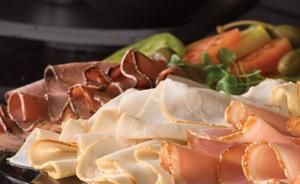
The bacterial levels of most meats bought at supermarket delis in the greater Adelaide area did not meet food standards guidelines, according to a University of Adelaide study.
The researchers pointed to a failure to practice hygienic food handling and standard food safety protocols and said supermarkets and retailers “needed to take a hard look at their processes and staff compliance”.
The research found that out of 174 samples of various ready-to-eat deli meats bought in supermarket deli sections across the greater Adelaide area, 134 (77 per cent) had bacterial levels that failed to meet food standards guidelines.
The study was carried out last year by final-year (sixth-year) veterinary science students as part of their veterinary public health rotation. The randomly selected supermarkets were not identified.
“Although no recognised food poisoning pathogens such as Escherichia coli or Salmonella species were found on these meats, the high bacterial count suggests that hygiene has been compromised,” said Professor Michael Reichel, Professor of Veterinary Public Health in the School of Animal and Veterinary Sciences.
“Such out-of-control processes are also susceptible to contamination with serious food poisoning organisms.”
Some samples (15.5 per cent) showed the presence of coliform bacteria, which may be evidence of faecal contamination, and some samples had total bacterial counts of more than 108 or 100 million per gram, representing “overt spoilage”, according to Professor Reichel.
“The presence of coliform would indicate really poor hygiene such as people not washing their hands after going to the toilet,” he said. “These levels of bacterial counts tell us that storage conditions, product handling and turnover should all be investigated.”
He also said more microbiological testing by the retailers themselves would help ensure proper processes were adhered to.
 The researchers said supermarkets and retailers need to take a hard look at their processes and staff compliance.