Australia has an enviable reputation for high quality, clean and safe food and beverage production. To reinforce that reputation, the engineering plastics used in production must be subject to – and meet – the world’s strictest standards. Cut To Size Plastics managing director Laurie Green explains.
Our focus on production purity gives Australian food and beverage producers an edge over many international competitors. This is especially so in those markets where consumers are happy to pay a premium for quality fresh and packaged goods.
Our foremost food, beverage and agribusiness industries are collectively worth more than $50 billion a year, including multi-billion dollar exports to some of the world’s largest developing markets (such as China) as well as strong sales in markets with exacting standards for food quality and purity, including Japan, Korea and the US.
This advantage has been hard won and equipping the food and process industry to maintain compliance is subject to strict hygiene standards on all materials involved in food and beverage production, including engineered plastics.
Such plastics have been making strong headway into food and beverage production, processing and packaging markets because they are typically light, tough, chemical resistant, low-friction and harmonise well with automation and rapid washdown needs to achieve efficiencies while maintaining hygiene and safety standards.
Fit for purpose
Just like metals, not all plastics are right for all tasks. It is one thing to know the relevant Australian and New Zealand Code and the guiding principles contained in AS2070-1999, and the relevant FDA regulations governing Food Grade plastics and the very comprehensive European Framework Regulation (EC) No. 1935/2004: Regulation (EU) No. 10/2011 (PIM), which defines the contact between plastics and food.
But the onus still remains on the user of materials to ensure they are fit for purpose. This is a fast-changing field, and the devil can be in the detail. Let’s consider the European regulations, for example, which are among the toughest in the world.
Plastics in this segment must be physiologically harmless in order to come in contact with food. The EU regulation enacted in 2011 for application in plastics manufacturing and processing aims to exclude harmful influences caused by migration of material such as colour pigments, separating agents and additives. The interaction between foodstuffs and foreign substances can carry certain risks. In order to minimise these risks and prevent any possible contamination, the European Commission introduced a regulation in January 2011 on materials and objects made from plastic.
This offers better protection for consumer health as well as for the composition of the particular food and its organoleptic characteristics. Particularly relevant is an individual measure from Framework Regulation (EC) No. 1935/2004: Regulation (EU) No. 10/2011 (PIM), which defines the contact between plastics and food. The depth and complexity of the European regulations can be seen from a checklist involving individual provisions of framework regulation (EC) no. 1935/2004, which are particularly relevant: EU regulation no. 10/2011 (PIM)defining contact between plastic and foodstuffs. Such provisions are particularly relevant to Australian and New Zealand food and beverage companies seeking to select materials that conform with such standards.
Key points to consider
Migration test
Required for standard tests with food simulants, times and temperatures, which reflect real situations. The following elements are tested: OML (overall migration limit), maximum quantities a material is allowed to emit; as well as SML (specific migration limit), the maximum quantity of a substances that can enter into food.
Declaration of conformity
Contains information regarding food regulations and suitability guidelines on possible uses. The declaration is valid until a change is made to the material, consequently altering migration rates, or until new scientific knowledge is developed.
Traceability and GMP (Good Manufacturing Practice)
The material must be traceable throughout every stage of the value chain. Manufacture must be in accordance with Regulation (EC) No 2023/2006, also known as GMP (Good Manufacturing Practice), which regulates quality system, quality system, quality control system and documentation.
Shared responsibility of all parties concerned with the manufacturing process
EU regulation no. 10/2011 relates to the manufacturing of all food contact materials and applies to the entire supply chain including manufacturing, processing and distribution. The conformity of products and processes must be ensured and confirmed across all stages of production. The final distribution company is then able to issue the final declaration of conformity.
List of raw and auxiliary materials
Defines the materials to use for production: Only monomers, additives auxiliary materials (e.g. drilling emulsion, cleaning agents) from the Union list (appendix one of EU regulation no. 10/2011 may be used in the manufacturing of food secure products.
Form optimum partnerships
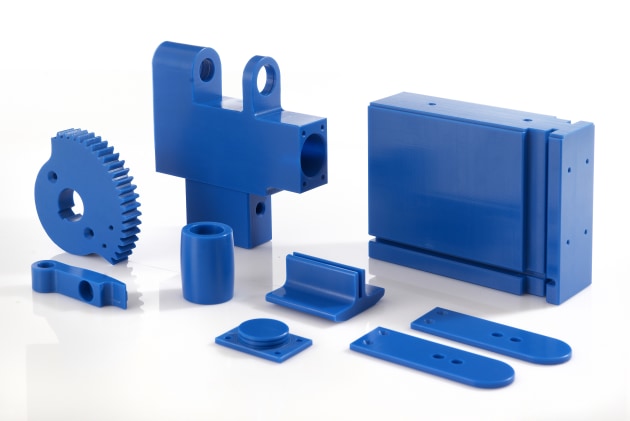
It’s a lot to think about, isn’t it? Sometimes it is too much for just one individual company to totally comprehend and be sure that the product they are producing – or the machinery they are introducing to produce it – complies in every single way.
This is where it is important to have a knowledgeable partner, using materials that have already overcome many of the regulatory hurdles. It comes down to local knowledge and reputable global suppliers, whichever partner you choose.
After more than 40 years as a specialist in engineering plastics, we appreciate that as suppliers, we have a strong duty of care to provide the very best guidance available. So, we practice what we preach to our customers: deal only with internationally reputable suppliers in this area who have already done the homework you need or can assist you with your unique situation.
Working with industry leaders with established knowledge of purity and safety requirements, food and beverage producers open up an avenue of expertise through which producers can receive guidance on overall product selection strategies, as well as guidance on vital technical aspects of individual products.
Forming good partnerships early in the production, modernisation or automation process makes simple good sense. It removes the need to re-learn lessons that have already been understood and implemented by experts in the field. And it provides an additional layer of assurance that when you go to market, your products carry the quality, purity and suitability endorsements of national and global leaders in their field.