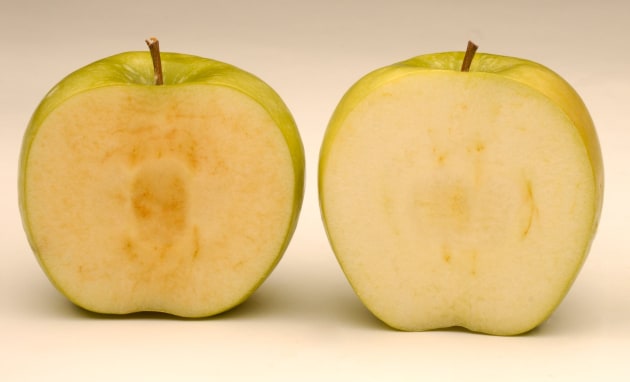
Apples that won't turn brown when cut, bitten, or bruised have been developed by a Canadian biotech company and will go on sale this month.
'Arctic apples' have been developed by Canada's Okanagan Specialty Fruits (OSF), the first company to license CSIRO’s non-browning technology.
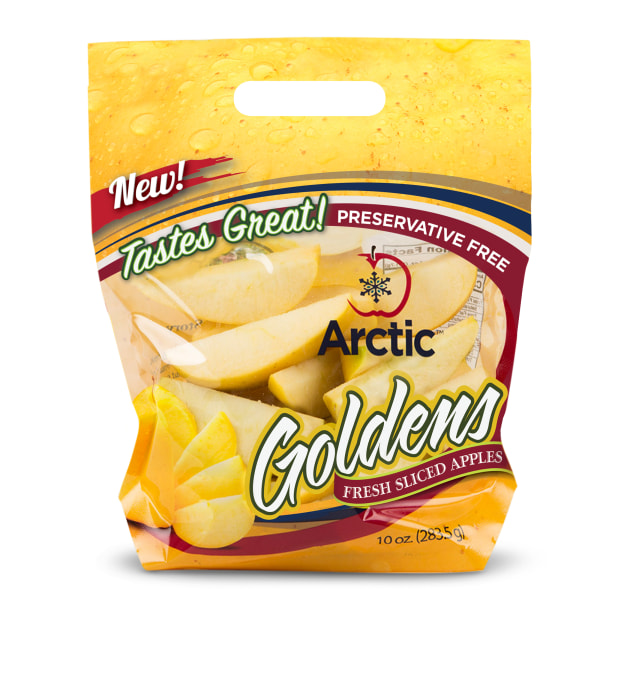
The apple will first be on sale at select US supermarkets, in the form of snack-sized bags of fresh apple slices.
More non-browning varieties are expected in future years, including Granny Smith and Fuji.
OSF founder Neal Carter began working on the apples in the mid-1990s.
“I came across research from CSIRO that had managed to ‘turn off’ browning in potatoes,” Carter said.
“As an apple grower, I was very aware that apple consumption had been declining for decades while obesity rates had simultaneously been sharply rising.
“My wife and I felt that we could help boost apple consumption through a similar biotech approach with apples, as non-browning apples would be more appealing and convenient.
“We felt this could also significantly reduce food waste, as nearly half of all apples produced end up wasted, many due to superficial bruising,” he said.
While there may be other sliced apple products already on the market, these are often coated with vitamin C and calcium to prevent browning and to preserve crispness, and this can change their taste.
Apples and other fruit and vegetables turn brown after they are cut or damaged because of a naturally occurring enzyme (polyphenol oxidase or PPO) that reacts with other components in the fruit cells when these cells are ‘broken’, producing a brown pigment.
CSIRO scientists constructed an anti-PPO gene which, when inserted into plants, blocks the production of PPO and therefore stops the browning.
This non-browning technology has potential to reduce waste not only in apples and potatoes but also in other horticultural crops such as beans, lettuce and grapes where produce with only small injuries could still be sold.