Drought, bushfires and Covid-19 have all contributed to a manufacturing slowdown, as the Australian Industry Group Performance of Manufacturing Index reveals the lowest results in almost five years.
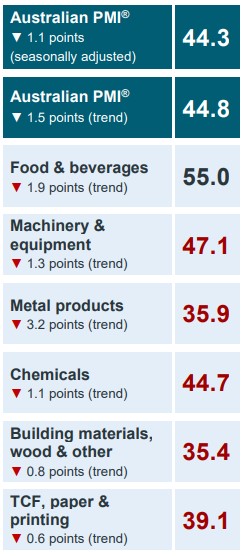
The PMI fell a further 1.1 points to 44.3 at the end of February, and is the first time the index has recorded four consecutive months of contraction since 2014. Readings below 50 points indicate contraction in manufacturing activity.
Respondents in February cited the novel coronavirus as a concern for the first time, in addition to drought and economic slowdown.
All six manufacturing sectors experienced weaker conditions in February, however food and beverage remained as the only sector in expansion, despite dropping 1.9 points to 55.0 points.
“The disruptive effects of the coronavirus, including on supply chains, are deepening and adding to the slowdown that has been in train since the closing months of 2019,” said Ai Group chief executive Innes Willox.
“The large food and beverages sector was the only sector that expanded in February with all other sectors experiencing steeper falls than in January.”
“Drought conditions continue to be raised as a negative factor despite the rain in some parts of the country. While the fallout from the bushfires was again reported as disrupting activity, fewer manufacturers identified this as a major detractor.
Willox said that despite the new orders index falling to its lowest level since mid-2019, the sector-wide employment is “still holding up”.
The PMI report shows the food and beverage sector also had slow local sales due to summer weather conditions and slower exports due to the global responses to Covid-19.
Panic buying heightens demand
Despite the manufacturing drop in February, Australians have responded to Covid-19 in March with panic buying a number of household products, such as toilet paper, with manufacturers increasing production to 24/7 and impacting on stock on store shelves.
CEO Ritchies Fred Harrison told Food & Drink Business stores are receiving deliveries of all items on most days, however, the public needs to be assured there is no need to panic buy toilet paper or other products.
It’s paper goods that are the biggest movers at the moment, namely toilet roll, as we all know, but it’s also tissues, hand towels, long life milk, rice, flour, pasta and biscuits – basically the products that don’t have a use-by date are in high demand," said Harrison.
"Fresh produce and the deli have not yet been impacted but we are also starting to see red meats fly off the shelves. Obviously, you can freeze meat, so people are taking the opportunity to stock up and put some extra packs in the freezer."