Beer drinkers have long known that a small tap on the top of an open bottle of beer can cause a big, foamy spillage, and now scientists say they discovered the cause.
Sound frivolous? Not so, according to the researchers, who say the finding has implications not only for the brewing industry but also for those who predict volcanic activity.
The researchers used a high energy laser to create a bubble at the bottom of a newly-opened bottle of beer, and then hit its neck. Using a high-speed camera recording at 50,000 stills per second, they found that the process had three distinct phases.
A vertical hit caused a shockwave that generated expansion and compression waves. When these reached the bottom of the bottle, the bubbles there burst into smaller bubbles, creating small balls of foam. Because these weigh much less than the surrounding beer, they rise rapidly to the top of the bottle, resulting in what resembles a small explosion.
This “cavitation” effect is similar to the effect in a mushroom cloud caused by a nuclear explosion, according to the researchers, and occurs in part because there is more carbon dioxide in the solution than it can maintain. Usually it would escape slowly, but a knock sets off a chain reaction that causes the gas to erupt, they say.
The team, led by Javier Rodríguez, a thermal and fluid dynamics professor at Universidad Carlos III de Madrid (UC3M), said the knowledge could also help predict the volume of gases that might erupt as a result of volcanic activity, such as in the 1986 Lake Nyos disaster in Cameroon, in which 1700 people were suffocated by carbon dioxide.
However, the research also has implications for brewers, according to Andy Furlong, director of policy and communication at the Institution of Chemical Engineers (IchemE).
“This research will be of wide interest including to chemical engineers who are the specialists behind the large scale brewing and bottling of famous household beer brands across the world,” he said.
“This greater understanding of fluid dynamics is always valuable especially when one considers the scale and complexity of modern brewing and bottling plants, and the forces and pressures involved during the manufacturing process.”
Furlong also said that armed with this knowledge, it may not be too long before chemical engineers find a way to keep the beer in the bottle and remove this trick from the armoury of bar-room pranks.
A few years ago, a series of US commercials for Miller Lite, made by Wisconsin brewer, Miller Brewing Co, featured a group of men seeking to identify the unwritten codes by which men live. The following funny ad from 2006 tackles the foaming beer prank – and deems it barbaric.
More than 700 Woolworths supermarkets across five states are now accepting soft plastics again, marking a major expansion of Australia’s growing soft plastics recovery network.
The 2026 Australasian Packaging Innovation & Design (PIDA) Awards finalists have been announced, with this year’s shortlist spotlighting the innovations, materials and talent shaping the future of packaging across Australia and New Zealand – and setting the stage for a competitive run into the global WorldStar awards.
PulPac has signed Australian packaging company Zipform Packaging as a licensee of its Dry Molded Fiber technology, to accelerate the development of fibre-based solutions for food packaging applications.
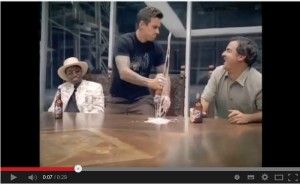 This Miller Lite commercial deems the foaming beer prank barbaric.