

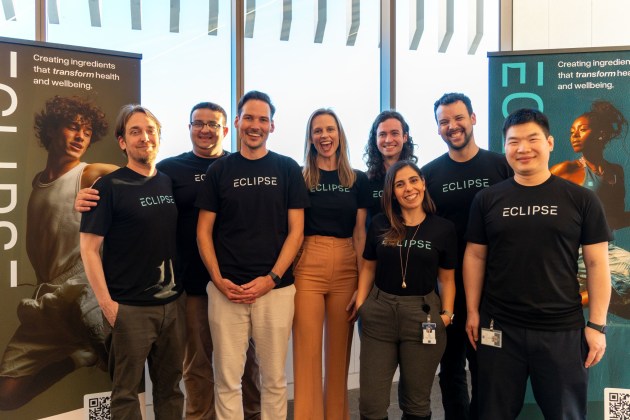
A further $10.4 million in matched grants has been allocated to successful applicants through the federal Industry Growth Program (IGP), including several companies in the food and beverage sector working towards commercialisation – such as East Forged and Eclipse Ingredients.
Innovative SMEs and startups play a crucial role in the economy, but many have difficulty bringing their ideas to market. The IGP aims to support eligible SMEs in their most challenging development phase through tailored advisory services, followed by an opportunity for matched funding grants.
Launched in November 2023, the IGP program has dispensed $142 million of the proposed $392 million, with 96 grants awarded to date, supporting “projects within Australian Government priority areas for the National Reconstruction Fund and that help build manufacturing capability”.
The latest round, revealed on 11 November, included:
- East Forged – $344,670 to commercialise its unique tea-brewing process and achieve independent growth through national and global markets of Southeast Asia and the US.
- Eclipse Ingredients – $1,904,487 to facilitate the commercialisation of human lactoferrin (hLF) by ensuring operational, technical, regulatory and market readiness. Program support will accelerate Eclipse’s technology development, define regulatory pathways and establish national and international markets.
Since its inception in 2020, East Forged has carved out a unique space in the beverage industry by offering the only iced tea cold brewed naturally without added sugars, colours, or artificial flavours. The company developed an innovative manufacturing process that produces cold-brew, nitrogen-infused teas, landing the Best Processing award at the Food & Drink Business Hive Awards in 2024.
East Forged also completed a $1.5 million capital raise in September 2024, led by Global Mind Agriculture Australia (GMAA), the venture capital arm of Vietnam’s leading agribusiness TTC AgriS.
Eclipse Ingredients is a bio-tech startup emerging from CSIRO in 2024, co-founded by Siobhan Coster. The company is using precision fermentation to unlock ingredients previously unavailable while offering a more scalable and sustainable approach to traditional ingredient production.
One of its most recent projects is a $5.5 million investigation into commercialising human lactoferrin, at the Queensland University of Technology’s (QUT) recently upgraded Mackay-based QUT Pioneer BioPilot fermentation facility, working with QUT and Australia’s Food and Beverage Accelerator.
The company stated on LinkedIn that the IGP funding brings its total non-dilutive funding to over $5 million, and will support the company in fast-tracking CDMO partnerships and demonstration runs, expanding commercial and regulatory traction across key markets, and strengthening its IP portfolio.
“All critical milestones on our path to commercial launch – and we're hitting them without unnecessary dilution,” stated Eclipse.
“This is the power of our capital-efficient, deep-tech model. Government co-investment allows us to de-risk our technology and prove commercial readiness before raising for scale. It's a competitive advantage we're incredibly grateful for.”


