


New technology developed by the CSIRO could assist beer and fizzy beverage producers in tackling industrial gas shortages, requiring only air and electricity to pull carbon dioxide from the atmosphere and help with beverage carbonation.
Created in partnership with Monash University, Energy Infrastructure and Resources and H2H Energy, the new technology – Airthena – aims to be a cost-effective, efficient and environmentally friendly option to recycle CO2 for use on-site and on demand.
Beverage production, food packaging and agricultural greenhouses all require CO2, and a common method used to generate it on site is often dependent on natural gas.
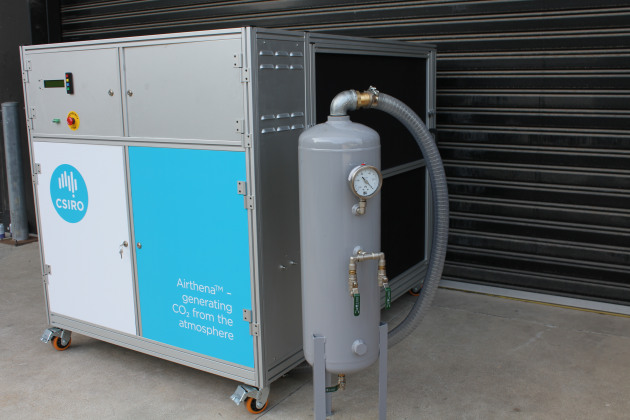
Airthena can capturing two tonnes of CO2 from the atmosphere a year, making it suitable for small-scale applications and has the potential for larger, commercial production, said CSIRO project lead Dr Aaron Thornton.
“It provides a more reliable source of CO2 for use in small-scale applications ranging from beverage carbonation to controlling pH in swimming pools, and industrial cleaning,” said Thornton.
"We are now exploring options for taking Airthena to market, which include reducing the cost of the unit for small scale applications and having it tested to ensure it meets food quality standards, or working with the food production industry to scale up the technology for larger applications.”
Airthena needs around two kilowatt-hours of electricity per kilogram of CO2, equal to around 20 cents per kilogram at minimum solar energy prices of $0.1 per kilowatt-hour at its current scale.
Thornton said that although the new technology will not make any immediate impact on cutting global CO2 emissions due to its scale, “it will help businesses with a more reliable source of the gas for their everyday operations, while reducing their carbon footprint”.


