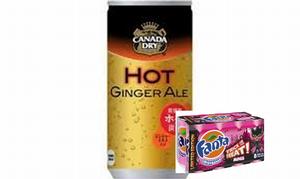
• Coca-Cola Japan has launched the first-ever heated carbonated drink in a can, and in Australia has launched a limited edition Halloween Fanta flavour.
    Coca-Cola Japan has launched the first-ever heated carbonated drink in a can, and in Australia has launched a limited edition Halloween Fanta flavour.
Close×

Coca-Cola Japan has launched the world's first hot carbonated drink in a can: Canada Dry Hot Ginger Ale.

Canada Dry Hot Ginger Ale is a spicy combination of ginger, apple, and cinnamon and is being launched to coincide with the northern hemisphere Autumn.

The product will be pre-heated and dispensed in vending machines in Japan from 21 October and could set the scene for the release of more warm canned products.

According to reports, the can-heating technology has been developed by US company Hot Can Inc. The contents are apparently warmed by an outer shell through a chemical reaction that heats the beverage without interfering with the carbonation.

Commentators liken the move to the seasonally-inspired Pumpkin Spice Latte trend in the US. Along similar lines, Coca-Cola has also just launched a themed beverage in Australia: a Halloween limited edition Fanta Strawberry Scream.

“Halloween is fast becoming a really popular family celebration, so we’ve added a spooky new treat to help celebrate with the Strawberry Scream flavour,” said Delia Maloney, Fanta marketing manager.

The company has also launched a new permanent flavour to the Fanta line-up in time for summer: Pineapple Lime.

Packaging News

PulPac has signed Australian packaging company Zipform Packaging as a licensee of its Dry Molded Fiber technology, to accelerate the development of fibre-based solutions for food packaging applications.

Following a rigorous two-stage judging process, finalists in the 2026 Women in Packaging Awards have been selected, reflecting the depth of talent, leadership and innovation shaping Australasia’s packaging sector.

Australia’s plastic packaging industry bracing for prolonged disruption, as conflict in the Middle East continues to drive sharp increases in resin costs, freight rates and supply uncertainty.