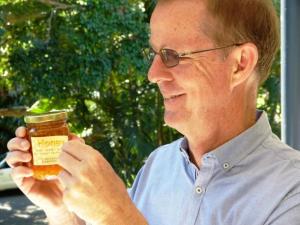
• Acting executive director of the Royal Botanic Gardens and Domain Trust, Dr Brett Summerell, applying the first label on the new honey product.
    Acting executive director of the Royal Botanic Gardens and Domain Trust, Dr Brett Summerell, applying the first label on the new honey product.
Close×

An exotic premium home-grown honey product sourced from beehives at The Royal Botanic Garden, Sydney is now commercially available.

Because The Royal Botanic Garden has an abundance of a wide range of flowering plants, it's an ideal environment for beehives to flourish and produce delicious honey, according to its caretakers.

The bees also play a vital role in plant pollination in the garden, and income generated from the sale of the honey, which sells for $11.95 a jar, will go towards plant conservation.

“There is a buzz here because the income we generate from the honey brand will go directly back into the garden’s conservation programs,” acting executive director of the Royal Botanic Gardens and Domain Trust, Dr Brett Summerell said.

It is also very important bee populations remain healthy and plentiful, he said.

“In each of the five beehives at the Garden there are at least 80,000 bees. It’s rewarding for us to contribute to sustainability in this way when bee populations around the world have been dwindling," Dr Summerell said.

Founding director of Urban Beehive, Doug Purdie, installed the hives and checks them every two weeks.

“Out of our first batch, each beehive has the capacity to produce at least 30 or 40 kilograms of honey," Purdie said.

The new honey venture has so far produced 130 jars and these are on sale at the Garden Shop.

Packaging News

IVE Group says its diversification strategy – including investment in packaging capacity – remains central to growth despite softer revenues in traditional print segments.

The Hive Awards are live! PKN's sister title, Food & Drink Business, is calling on all processing and packaging innovators in the food and beverage sector to get on board and submit entries by 13 March.

A new AFGC snapshot of Australia’s food and grocery manufacturing sector highlights rising costs and slowing real growth – while calling for national progress on packaging circularity and digital labelling.