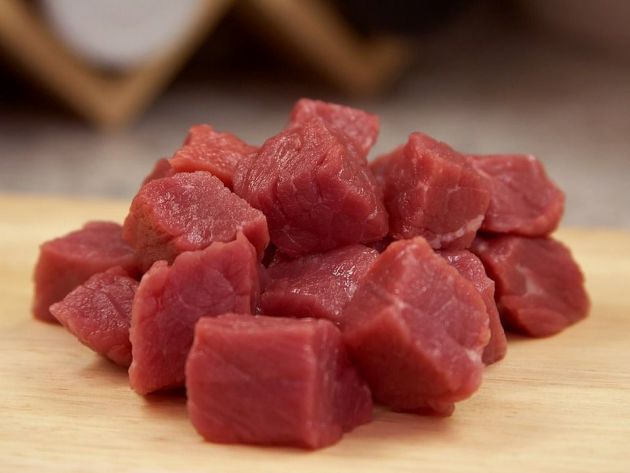
While the debate continues about the health merits of beef, it remains one of Australia's hottest exports.
In fact, more than 70 per cent of our meat processing industry's revenue is derived from export markets, and the US is a key market.
The Australian Food and Grocery Council’s (AFGC) State of the Industry 2015 report showed that the falling Australian dollar and improved market access flowing from trade agreements were improving the competitiveness of Australian food and beverage exports.
In 2015-16, IBISWorld said the Australian meat processing industry saw annual growth of $19.4 billion, and a profit of $2.1 billion. Exports accounted for $14.1 billion of this.
The meat processing industry has picked up in the past five years due to improved weather conditions and surging export demand.
Production volumes of beef and lamb have risen, with strong demand boosting prices and encouraging farmers to sell livestock to reap the benefits.
Increased prices and production levels have in turn helped boost revenue for meat processors.
Industry revenue is forecast to grow at an annualised 9.0 per cent over the five years through 2015-16, to reach $19.4 billion.

The notorious WHO report
The World Health Organisation (WHO) report of 2015, which linked red meat with cancer, wasn't enough to dent consumers' enthusiasm for beef.
Meat and Livestock Australia responded by referring to Australian Dietary Guidelines which recommend 455g per week of cooked red meat as part of a healthy, balanced diet.
“There's no reason to believe that eating beef and lamb as part of a healthy, balanced diet and lifestyle in 100-200g portion sizes (raw weight), three to four times a week as recommended in the Australian Dietary Guidelines, will increase risk of cancer,” the MLA stated.
“Red meat such as beef and lamb is a critical, natural source of iron and zinc, vitamin B12 and omega-3 – essential nutrients needed to keep the body and brain functioning well."
The MLA said children and women were eating less than the recommended amount of red meat and one in five women had some form of iron deficiency.
All processed meats, including sausages, must comply with the Australian Food Standards Code, as well as national and state food standards legislation and regulations.
Australia's 'beef capital'
According to IBIS World's 2014 Beef Cattle Farming in Australia report, Queensland is Australia's primary beef producer and home to 46.8 per cent of Australia's total beef cattle herd.
As for the country's beef herd, it owns 49 per cent.
As a result, Queensland accounts for the largest amount of red meat produced in Australia.
The inaugural FoodTech QLD exhibition will bring together key packaging and processing suppliers and the food and beverage manufacturers based in the region.
To register for FoodTech QLD, click here.