The Federal Government is delaying the introduction of the controversial backpacker tax to better assess its impact.
The introduction has been pushed back to 1 January 2017 to allow a cross-departmental review of the tax, which would remove the tax-free threshold and increase the amount of tax paid by workers who come to Australia under the Working Holiday Maker program.
The backpacker tax has attracted widespread opposition from the agriculture industry since it was first proposed.
Vegetable industry body Ausveg – which says the new tax would threaten the viability of the Australian vegetable industry – said it welcomed the announcement.
“The Federal Government’s decision to review the backpacker tax is a welcome sign that they are finally acknowledging the concerns held by the Australian agriculture industry, and we hope that this is a step on the road towards the implementation of a more reasonable solution,” Ausveg deputy CEO Andrew White said.
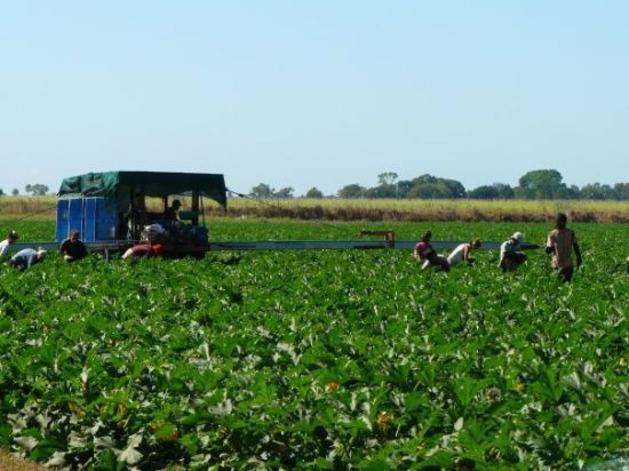
“Australian vegetable growers rely on backpackers to offset domestic labour shortages and perform the high amounts of manual labour needed in vegetable production. Whether the tax is introduced at the currently proposed level now or in six months, the effect will be the same – it will threaten the availability of this vital labour source and leave growers unable to get crops off the field.
“We hope the Federal Government’s review delivers a sensible solution to this issue which acknowledges the unique needs of the Australian vegetable industry and will continue to enable Australian growers to access this important source of labour,” White said.
Ausveg said statistics from the Department of Immigration and Border Protection show that the number of backpackers coming to Australia has dropped repeatedly over the past two years, with over 34,000 fewer visas granted in 2014-15 than in 2012-13.
“The ongoing decline in backpackers visiting Australia must be arrested if the Australian vegetable industry is to remain viable, and any further decrease in the number of backpackers visiting Australia could have a crippling impact on the Australian vegetable industry,” White said.