The demonisation of sugar emerged as a hot topic at Australia's non-alcoholic beverage industry conference, ausdrinks, which was the held on Queensland's Gold Coast this week.
At the conference, Australian Beverages Council CEO Geoff Parker pointed out that although soft drinks have become a soft target for health campaigners, Australia's beverages industry is already one of the most innovative in the world, with more than one third of products diet or low calorie.
“When you look down the supermarket aisle you notice, more so than any other category, beverages are extremely unique in providing both regular and low-kilojoule options.”
The anti-sugar movement has been spurred by a number of popular books including David Gillespie's Sweet Poison, and Sarah Wilson’s I Quit Sugar, as well as academics and public health groups.
The Rethink Sugary Drink group led by the Cancer Council, Diabetes Australia and the Heart Foundation of Australia, for instance, have also blamed obesity on sugary drinks and are also pushing for policy options including a tax on sugar-sweetened beverages.
Social commentator, author and researcher Dr Rebecca Huntley, said the trend was based on the popular idea that the exclusion of a single food type, such as fat or sugar, is the answer to the growing problem of obesity.
“My feeling is that [sugar] will go the same way as fat. It just does not seem possible that the community can remain focused on excluding something so fundamental for so long,” said Huntley, who is executive director, The Mind and Mood Report, Australia’s longest running qualitative social trends study.
She said that as occured with fat, and with the greater knowledge now available around good fats and bad fats, consumers are likely to develop a far more complex relationship with sugar and how they incorporate it into their diets.
“It will head there but I don't think we're going to get there in six months. It may be a cycle of two to five years. It depends on consumers and how long they can sustain it and how much benefit they get from it and what happens to that media focus.”
Dr Huntley also told attendees that the idea of a soft drink tax as a means to combating obesity was seen as a great mistake by consumers.
“There is a sense of cynicism that this is all about revenue raising by government,” she said.
Parker also said singling out just one product is not going to solve the problem of obesity, pointing to a new academic study Non-linear effects of soda taxes on consumption and weight outcomes published in the US publication Health Economics.
The study evaluated the impact on consumption and weight outcomes, and found that a tax on soft drinks can actually lead to increased caloric intake because often people shift consumption to other food and beverages.
Results for total caloric intake show that a one percentage point increase in the soft drink tax rate actually increased total caloric intake by 27.7 calories per adult per day.
“Time and time again, analysis of a sugar tax has shown the proposal to be bad policy,” Parker said. “The conclusion of this US study specifically calls into question the assumptions that supporters of large soft drink taxes make on its likely impacts on population weight.”
According to Parker, for the last decade the beverage industry has not marketed regular kilojoule products to children under 12 and has restricted sales of regular kilojoule soft drinks in schools; it has reformulated products to offer low and no-sugar varieties; and it has voluntarily displayed kilojoule information on the front of labels.
Parker told attendees that via these types of strategies, and in communicating the key facts of the debate at every opportunity, the non-alcoholic beverages industry had a role to play along with other stakeholders in addressing the complex and multi-factorial issues of overweight and obesity.
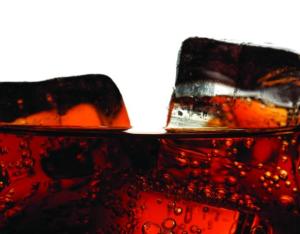 Soft drinks have become a soft target for health campaigners, according to the Australian Beverages Council.