The ACCC is calling for a mandatory code of conduct which addresses bargaining power imbalances between dairy processors and farmers in Australia.
Recommendations for the code have been made by the ACCC in an interim report from its inquiry into the industry, published this week.
The ACCC’s report follows a 12-month inquiry into the Australian dairy industry, and states that a code would address bargaining power imbalances, improve price and production signals, stop practices that transfer risk inappropriately, and enhance competition for farmers’ milk.
“What’s clear is that processors, often under pressure from supermarkets or export market competition, use their relative bargaining power to shift risks onto dairy farmers," ACCC commissioner Mick Keogh said.
"The power imbalance is evident in the nature of contracts between the processors and farmers. These involve uncertain pricing information and contract terms which deter switching.
“A code would strengthen dairy farmers’ weak bargaining position and therefore improve competition at the farm gate."
There have been some improvements following the introduction of a voluntary code, but the ACCC said it didn't fully address the issues causing issues for the industry in the longer term.
"The voluntary code is not enforceable, and processors can choose to not participate or not comply, and there are no negative consequences,” Keogh said.
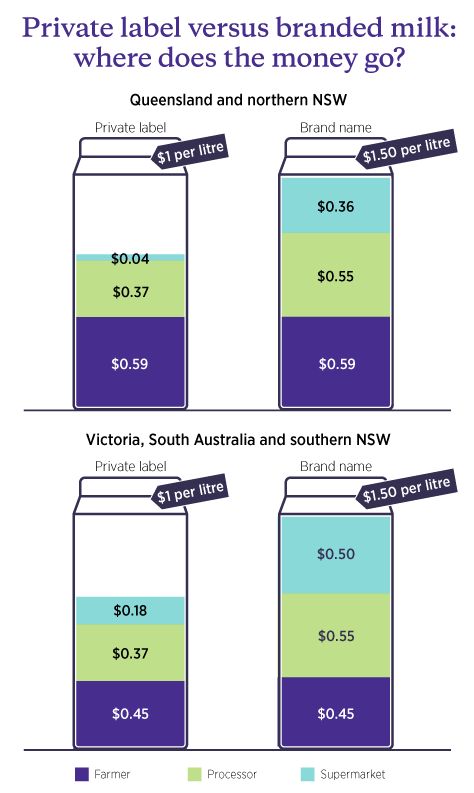
The ACCC also analysed the impact of $1 per litre private label milk on earnings throughout the dairy supply chain.
The decision by supermarkets to sell private label milk for $1 per litre is a source of annoyance for many dairy farmers, who believe this price denigrates all the effort they put into producing milk, Keogh added.
“However, the ACCC found that farmers earn the same regardless of whether their milk ends up as private label, or more expensive branded milk," he said.
"Farm gate prices are quarantined from other costs which affect the prices paid by supermarkets and the margins earned by processors."
He doesn't believe an increase in the retail price of private label milk would necessarily benefit farmers.
The ACCC’s report makes eight recommendations arising from its analysis of the industry to date, and is seeking feedback in the interim report by 31 January before releasing a final report in April 2018.