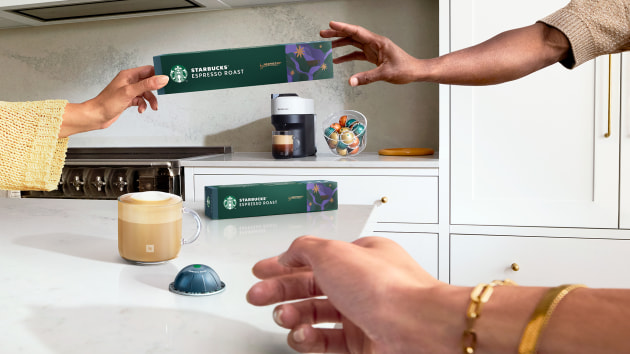
• Nespresso and Starbucks have teamed up to launch Starbucks coffees for the Nespresso Vertuo system, bringing blends such as Pike Place Roast, Blonde Espresso Roast, and Caffè Verona to Vertuo coffee lovers in Australia for the first time.
Source: Nespresso
    Nespresso and Starbucks have teamed up to launch Starbucks coffees for the Nespresso Vertuo system, bringing blends such as Pike Place Roast, Blonde Espresso Roast, and Caffè Verona to Vertuo coffee lovers in Australia for the first time. Source: Nespresso
Close×

Nespresso and Starbucks have teamed up to launch Starbucks coffees for the Nespresso Vertuo system, bringing blends such as Pike Place Roast, Blonde Espresso Roast, and Caffè Verona to Vertuo coffee lovers in Australia for the first time.

Since the formation of the Global Coffee Alliance in 2018, Nespresso and Starbucks have introduced a range of Starbucks coffees for Nespresso’s at-home original machines, available in grocery stores.

Nespresso ANZ coffee ambassador, Monique Dean, said the company was excited to offer Vertuo lovers some of their favourite Starbucks coffees, which can now be enjoyed at the touch of a button, and from the comfort of home.

“Our Vertuo system is designed for experimenting with different coffee creations and blends, so we know club members will love having five more delicious coffees to explore,” said Dean.

Starbucks by Nespresso coffees for Vertuo are made from 100 per cent Arabica coffee. The range includes:

  • Espresso Roast
  • Blonde Espresso Roast
  • Caffé Verona
  • Pike Place Roast
  • Single Origin Colombia

This range will be sold exclusively by Nespresso, now available in all boutiques and online at nespresso.com.

Packaging News

The World Packaging Organisation has named 234 winners for the WorldStar Packaging Awards 2026, which were selected from 481 entries submitted across 36 countries.

ACOR is calling on the Government to urgently introduce packaging reforms or risk the collapse of Australia’s plastic recycling sector and face millions of tonnes of plastic waste polluting the environment.

As 2025 draws to a close, it is clear the packaging sector has undergone one of its most consequential years in over a decade. Consolidation at the top, restructuring in the middle, and bold innovation at the edges have reshaped the industry’s horizons. At the same time, regulators, brand owners and recyclers have inched closer to a new circular operating model, even as policy clarity remains elusive.