On Greece’s southern Peloponnese peninsula, Australian couple Harry and Morgan Labrakis are intent on reviving centuries old traditions and methods to produce their organic, small batch olive oil, Kyveli.
The pair’s family have been making olive old from the organic groves in Laconia for more than 200 years. The methods have remained largely unchanged, with their olive oil made using slow, hands-on farming traditions.
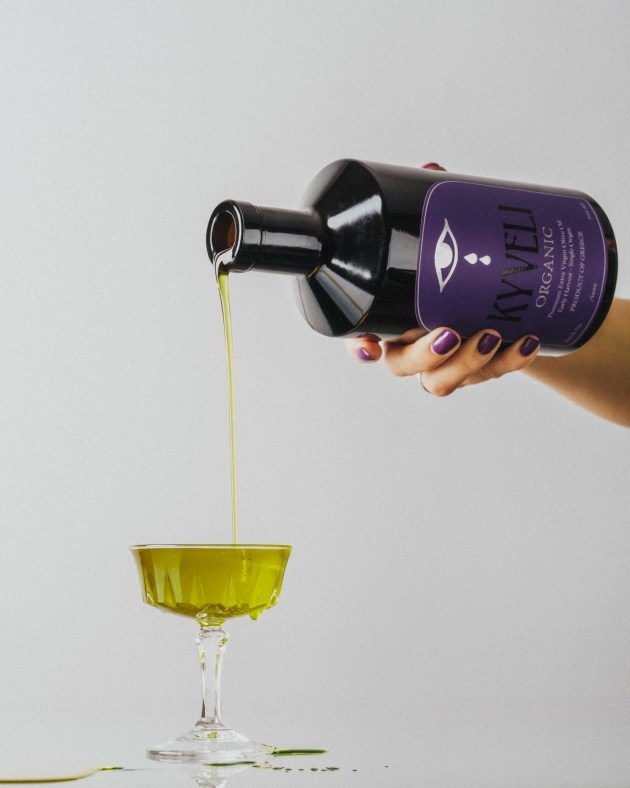
Each olive is hand-picked early in the season, when its polyphenol content is at its peak, and pressed within hours to preserve its rich flavour, delicate aroma, and naturally potent qualities.
No machinery is used. The trees are never shaken. The land is never sprayed, and with neighbouring farms following the same philosophy, the grove remains truly wild and organic.
The EU organic certification reflects the way the Labrakis family has always farmed, naturally, intentionally, and in harmony with the land.
It is a far cry from their previous careers, Harry as a music producer and Morgan a fashion stylist. The farm has been in Harry’s family for six generations.
When they married, his parents entrusted them with the farm and its care.
“We wanted Kyveli to be radically transparent, from soil to bottle. There’s so much confusion around food labels today. Even terms like ‘natural’, ‘extra virgin’, or ‘organic’ can mean very different things in practice.
“For us, there are no pesticides, no fillers, just real food, made the way our ancestors intended,” Morgan said.
“Olive oil is something you use so many times in a day. Using Kyveli invites you to slow down, reconnect with what nature provides, and honour the rituals that sustain us,” Harry adds.
“This olive oil isn’t just a product; it’s a living piece of our family history and the land’s legacy. Bringing it to people’s tables feels like sharing a gift that’s been centuries in the making.”
Produced in small seasonal batches, each 700ml bottle of Kyveli is poured and labelled by hand. Nationwide shipping is now available across Australia at kyveli.com.au for $82.