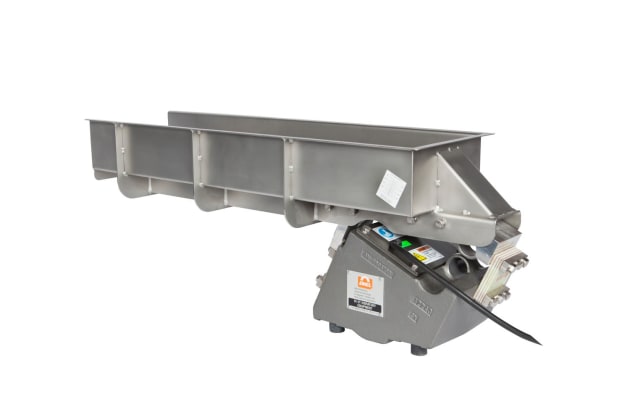
The Eriez updated Vibratory Feeder Line efficiently moves and meters a variety of virgin and processed nuts of any size or shape.
The company is continuing to advance the design of this equipment to evolve and meet the industry’s needs and regulatory challenges.
All Eriez vibratory feeders specified for nut processing are made to comply with strict guidelines set forth by Safe Quality Foods (SQF), Good Manufacturing Practices (GMP) and sanitation requirements.
Eriez vibratory feeders are commonly used to meter nuts into downstream processing equipment. The vibratory feeder acts as the bulk metering device to provide the nuts at a controllable, easily adjusted rate. Feeders are also used to sprinkle salt, sugar, or other seasonings during nut processing.
Eriez electromagnetic feeders are offered in various models and designs to meet specific application requirements.
Eriez HD (High Deflection) Vibratory Feeders combine the higher tray deflection, lower frequency advantages of mechanical feeders with the trouble-free service and adjustability of electromagnetic feeders.
When screening is required to remove undersize material such as excess salt or oversize materials such as agglomerated coated nuts, the higher tray deflection of HD models is ideal. HD Feeders are commonly utilised in nut processing applications when gentle feeding is critical.
![WorldStar 2026 winners announced [UPDATED]](http://yaffa-cdn.s3.amazonaws.com/yaffadsp/images/dspArticle/featureImage/wpo.jpeg)