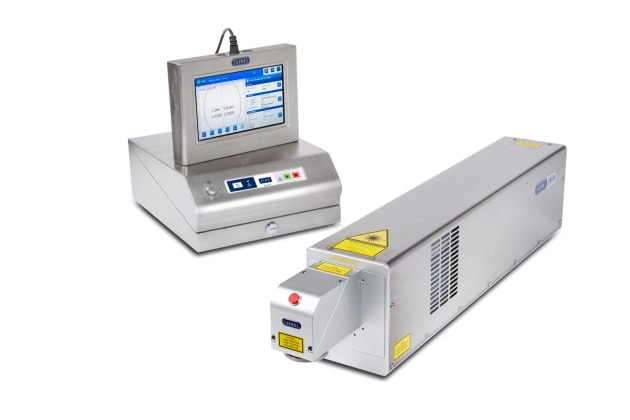
Making permanent marks on gin and whiskey bottles operating at a line speed of 2100 per hour, the Linx CSL30 laser system is providing clear and sharp codes for the premium Scottish Bruichladdich Distillery Co.
Bruichladdich produces premium whisky made from barley grown right next to the distillery on the Isle of Islay in the Inner Hebrides.
The permanent coding provides dates and traceable origins on black or coloured bottles ready for the export market.
Originally, Linx CSL30 (30 Watt) laser coders were installed on the Botanist Islay Dry Gin clear bottles. The laser etches two lines 5mm in height on the bottom of the glass gin bottles to meet the standards demanded by the market.
Bruichladdich Bottling Hall manager Jonathan Carmichael said, “As a producer of premium spirits, it’s vitally important that the codes on our bottles are clear and sharp and in keeping with the brand’s expectations.
“Another key factor in the decision to install a laser coder was the low maintenance required, meaning less downtime in production. For these reasons we’ve not hesitated to install a CSL30 on our whisky line as well.”
Ease of installation, low maintenance costs and no consumables required, the Linx CSL30 provide clear permanent codes on glass bottles for premium products. Linx lasers are available in Australia through Raymax Applications.