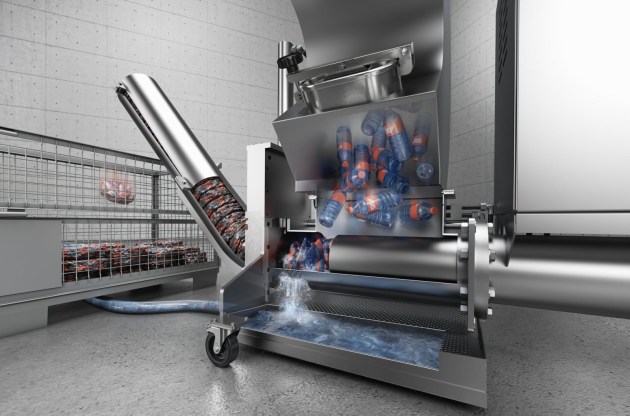
New to Australia, the WEIMA-Puehler Depacking, Dewatering and Compression series has been developed for cost effective and reliable management of packaged production waste.
Distributed by WEIMA’s long standing partner in Australia, CEMAC technologies, the Puehler series contains label presses, can presses, recycling and packaging presses, rework presses, and chip presses. These allow efficient dewatering and compressing a range of packaging applications such as plastic bottles, Liquid Paper Boards, aluminium cans and much more.
Until now, rejects, production defects and defective batches have had to be disposed of expensively because the contents are still in the packaging. Through CEMAC technologies you can get the all-inclusive package. Once filled, the machine separates the contents from the packaging in one process step. The packaging itself is compressed.
The discs produced are ideally suited for paper, plastic, or metal recycling. The contents can be disposed of properly or reused. Made of stainless steel with special welding seams to prevent contamination, food grade oil and a low-maintenance, fully automatic cleaning system within the machine ensures hygiene standards are met and allows high machine availability.
WEIMA-Puehler dewatering machines and presses are simple and easy to maintain and can be integrated into any production line. With the recovered output, high-quality goods can be produced again, saving waste disposal costs, and reducing food and packaging lost to landfill. CEMAC technologies is the Australian distributor of WEIMA machines.