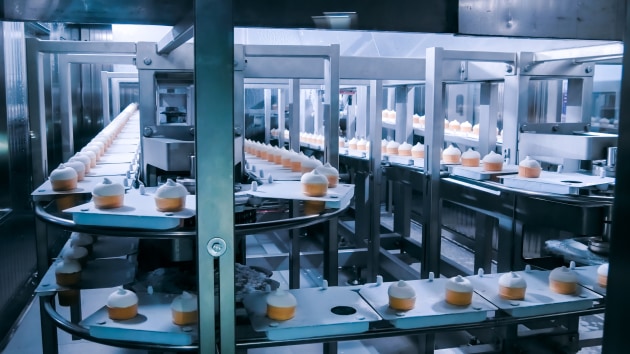
Boilers and heat exchangers are critical to food and beverage manufacturing and distribution, being key to both heat and refrigeration processes integral to safety, quality, and efficiency.
These workhorses of production and processing are indispensable to pasteurisation, sterilisation, cooking, and sanitation including CIP systems used to clean the interior surfaces of pipes, tanks, and process equipment without disassembling them.
To get the best reliable performance from energy intensive heat exchangers, HVAC-R and boiler systems need both programmed inspection and regular maintenance to prevent energy wastage, reduce energy consumption and avoid the operational costs of unscheduled shutdowns.
Because they are subject to continual pressure, expansion, contraction, and corrosion, they require regular maintenance to minimise leaks and curtail the losses of energy and efficiency resulting.
Maintenance can involve separation of decayed pipes and components, a process which can cause its own problems, with the application of high point forces or excessive uneven force on extensive piping systems, leading to further leak and safety hazards.
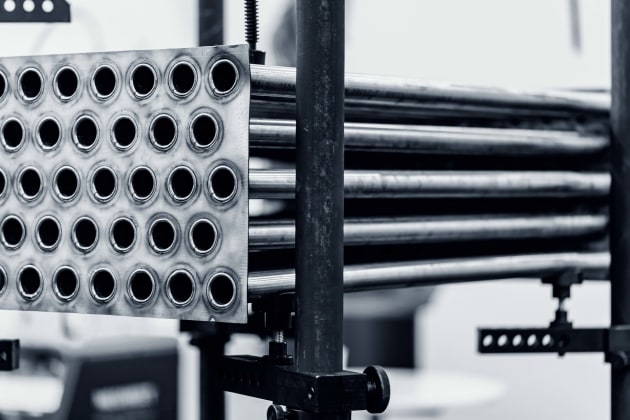
One way to mitigate against such hazards is the use of slim and powerful heavy duty pneumatic cushions instead of bulky high-force metal tools. These powerful but evenly spread force devices can minimise the risk of machinery damage – and maximise maintenance safety – during lifting, shifting, spreading, and servicing of heat exchangers and boiler technology.
“There are tens of thousands of boilers and heat exchangers in service throughout Australia in primary, dairy and general food and beverage processing, production and packaging applications that require heating, cooling and energy recovery,” says actuation, isolation and suspension specialist Vinh Lam of Air Springs Supply.
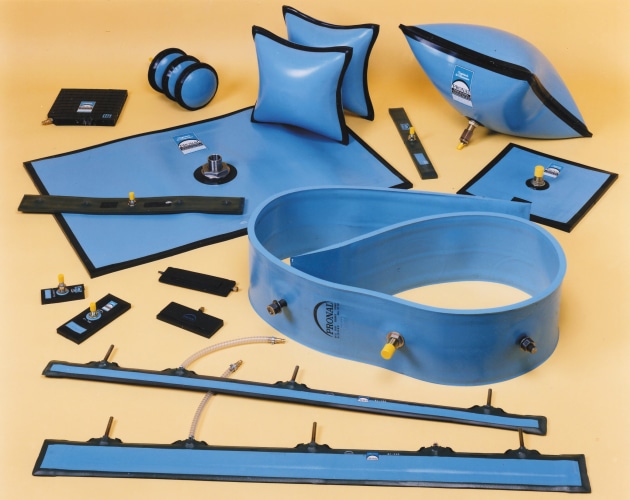
Air Springs Supply is the Australian national distributor of the tough Pronal elastomer ranges of pneumatic cushions, which are top-quality heavy-duty equipment also used by military and civil defence organisations for rescue and recovery operations, extending from flood and earthquake, to lifting of damaged aircraft, locomotives and heavy vehicles.
Types such as compact, low-profile CLT lifting cushions – ranging from one to 65 tonnes capacity with heights of 90–515 mm – can be used individually or in multiples for safe, evenly distributed lifting, shifting and spreading in confined spaces. Their thin profiles and low weights (0.6–22 kg) also make them suitable for multipurpose, repeat, and mobile applications, such as being suitable for vehicle recovery, quarry rock splitting, pipeline lifting, shifting, and positioning, and emergency or rescue services.
Uses in industry
Heavy duty inflatable air cushions are commonly used during heat exchanger and boiler servicing and maintenance as lifting tools, for precise alignment and manoeuvring of heavy components, such as tube bundles or plate packs.
In boiler maintenance, they can also separate tube banks (also called boiler banks or generating banks) which are the primary site for heat exchange and are highly susceptible to performance-degrading issues.
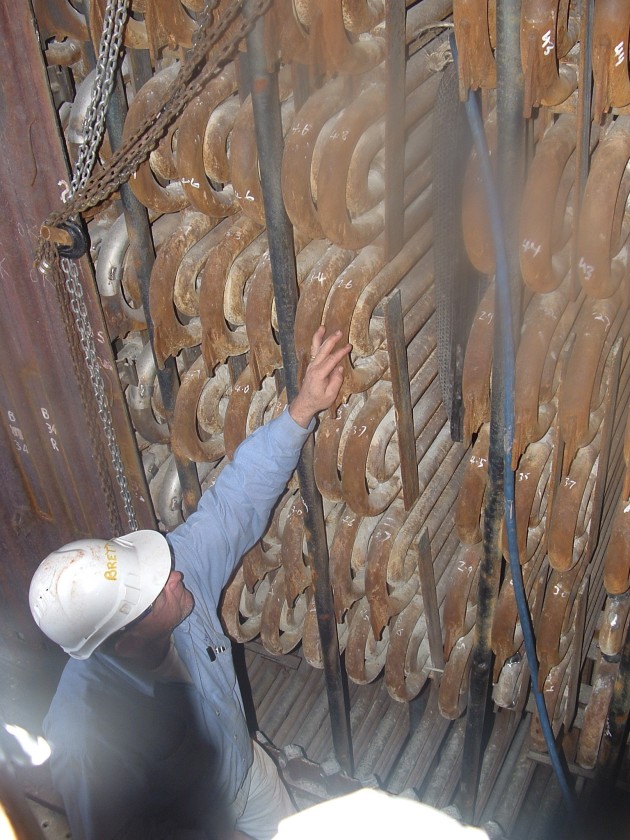
Uses include:
- Lifting and Positioning: They are inserted into tight gaps and inflated with standard 7-8 bar industrial compressors, hand pumps, or (in remote applications) air cylinders, to provide controlled, gradual lifting force. “This can be safer and more precise than using traditional heavy mechanical jacks or levers, especially for delicate components,” says Vinh.
- Alignment: During reassembly or installation of new bundles/plates, the controlled lift helps with final alignment before bolting or welding. The rubber construction provides better adherence to smooth surfaces, reducing the risk of slippage and work accidents
- Minimising Damage: The flexible, inflatable material can conform to uneven surfaces, distributing force evenly and reducing the risk of scratching or denting delicate fins, plates, or seals, which can be made of stainless steel or titanium. Unlike hammers or metal wedges, which can cause point forces and damage, the cushions distribute thrust evenly over a larger contact surface, protecting the integrity of the components being moved.
- Access: They can create small gaps to insert other tools or inspection cameras into tight spaces within the unit, enabling better access for cleaning or non-destructive testing. Their thin, flexible nature, when deflated, allows them to be easily inserted into very tight or awkward spaces where conventional lifting or pushing tools cannot fit.
- Efficiency: They can significantly reduce the time required for setup and repetitious maintenance tasks compared to manual or mechanical methods.
Pronal CLT cushions (high-pressure lifting bags) are constructed from multiple layers of aramid fabric reinforcement (known commonly by the brand name Kevlar) coated with a chemical-resistant elastomer (synthetic rubber). The manufacturing process involves hot vulcanisation in an autoclave, which bonds the materials together into a single, seamless, and highly durable product. This gives the cushions a high strength-to-weight ratio and enables them to withstand high inflation pressures of up to 8 bar (116 PSI).