


Foodbank’s 2026 Hunger Report has confirmed what its report last year started to show – not only is one in three households not reliably able to afford food in the past year, but middle-income working households are driving the shift and fresh produce, protein and dairy are the first items cut from the basket.

Foodbank’s report found 37 per cent of households earning between $33,800 and $90,999 annually were unable to reliably afford enough food in the past 12 months.
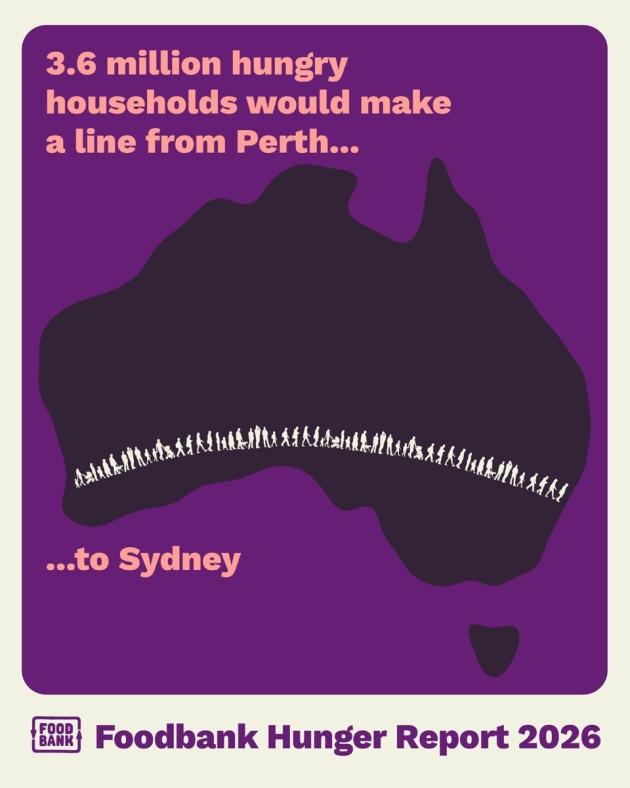
3.6 million households, or 33 per cent, experienced food insecurity, which was 100,000 more than in 2025.
Nearly seven in 10 (69 per cent) of those households experienced it for the first time in the past year, and 23 per cent of the middle-income group fell into the severe category.
“Hunger is no longer confined to the margins; it is impacting middle Australia. A wage used to be what kept food on the table, but for a growing number of working Australians their pay packet no longer stretches that far,” Foodbank Australia CEO, Kylea Tink, said.
The national rate itself is steady. It was 32.8 per cent in 2025 and sits below the 35.9 per cent peak recorded in 2022. The rise in household numbers reflects population growth, which Foodbank acknowledges in the report, while arguing that a flat rate should not be read as progress.
More than half (53 per cent) of households earning $33,799 or less are food insecure, and 37 per cent are severely food insecure, the highest level recorded for that group since data collection began.
Housing tenure remains the sharpest dividing line. Half of renting households (51 per cent) are food insecure, compared to 12 per cent of those who own their home outright.
The report cites ABS data showing median weekly rent reached $705 in June 2026, up 40.6 per cent over five years.
Work is offering less protection. Food insecurity among households with a part-time or casual worker hit a record 42 per cent, compared with 33 per cent nationally.
The share of food insecure households citing difficulty finding work rose from 11 to 15 per cent, and those citing job loss from 10 to 13 per cent.
Within households with children, 45 per cent experienced food insecurity, while 60 per cent of single parent households were affected, with nearly two in five (38 per cent) experiencing severe food insecurity.
Shame remains a barrier to relief. Nearly half (48 per cent) of food insecure households cited embarrassment as a reason for not seeking help, and only half knew where to find it. Just 26 per cent received help from a formal organisation, while reliance on family and friends rose from 25 to 29 per cent.
Changes in spending behaviour
The report’s details on spending behaviour show that 56 per cent of insecure households swapped to cheaper alternatives such as frozen or tinned food instead of fresh, or imperfect produce, and 66 per cent hunted for discounts.
The cuts impact categories that carry the most nutritional value. Thirty-eight per cent of food insecure households reduced fresh produce purchases, 37 per cent cut protein and 28 per cent cut dairy. Pantry staples, including oils, sauces, cereals, soups and canned goods, were trimmed by 42 per cent.
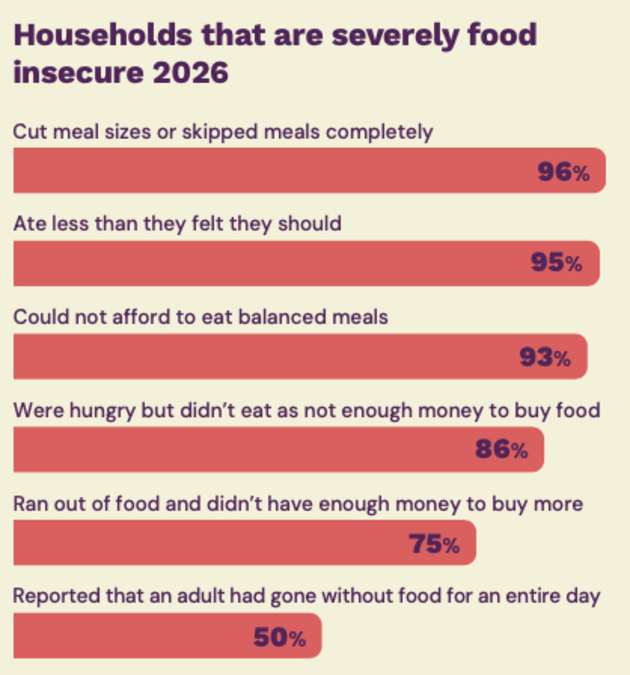
Among severely food insecure households, 96 per cent cut meal sizes or skipped meals and half reported an adult going a full day without food.
The squeeze extends to non-food grocery lines and on-premise. Almost half cut back on household items such as foil and bin bags (49 per cent) and on cleaning and personal care products (47 per cent), while 61 per cent spent less at restaurants, cafes and bars. Twenty-nine per cent used credit cards or buy now, pay later to cover costs.
Cost of living was a top concern for 92 per cent of food insecure households. The report cites ABS figures showing consumer prices rose 3.5 per cent in the year to July 2026, led by housing (five per cent) and food and non-alcoholic beverages (3.2 per cent).
More than a third of Australians (35 per cent) expect their finances to worsen in the next year, rising to 61 per cent among those already finding it very difficult to get by.
Funding and the surplus question
Foodbank welcomed $700,000 in federal surge funding announced on 11 October, part of a $4.7 million package from Social Services Minister Tanya Plibersek that included $2 million shared between OzHarvest, Good360, Foodbank and SecondBite.
“Importantly, this funding will not add to inflation as it will help Foodbank Australia redirect surplus food that has already been produced to households struggling to put food on the table,” Tink said.
Of Foodbank’s eight-point call to action (see below), the most direct ask of industry is to make it as easy as possible for producers and manufacturers to supply surplus to charities, including through donation incentives.
It is familiar ground. In March, the federal government rejected Senator Dean Smith’s food donation tax offset bill, citing an uncapped budget cost and the risk of favouring large corporations, and pointed instead to $20 million over five years for the four major food rescue groups. The bill had already been rejected by the Senate Economics Committee in 2024, despite KPMG modelling that estimated a $2 billion annual social, economic and environmental benefit.
Foodbank also wants food security treated as a national priority and says it will keep feeding into the government’s Feeding Australia strategy, which is being developed with the National Food Council and is due in mid-2027.
“The findings in this report demand more than concern from corporate Australia. One dollar can put two meals on the table. Food relief organisations cannot solve this alone, we need government, business, philanthropists and communities to step up to the plate,” Tink said.
Foodbank recommendations
- Set a national baseline for School Breakfast Programs
Establish a national minimum standard for school breakfast programs, ensuring every Australian child has access to a nutritious breakfast at school by 2030.
- Increase investment in food relief
Ensure food relief organisations have the resources required to meet growing demand and respond rapidly during periods of heightened economic hardship.
- Improve access to food relief
Increase awareness, availability and accessibility of support services, particularly in regional Australia.
- Address income inadequacy
Strengthen the financial safety net to ensure social security payments and household incomes better reflect the true cost of living.
- Support renters and vulnerable households
Develop targeted measures for renters, low-income households, people living with disability and other groups facing disproportionate risk.
- Reduce stigma
Create a national conversation that normalises seeking assistance and recognises that food insecurity can affect anyone.
- Treat food security as a national priority
Recognise access to adequate food as a foundational social and economic issue that affects health, education, productivity and community wellbeing.
- Make it as easy as possible for producers and manufacturers to supply surplus produce to charities for redistribution
Introduce incentives that help farmers and manufacturers donate surplus produce and support food relief organisations to recover it.
Breakfast as the policy lever
The report’s main positive finding is school breakfast uptake. Participation among food insecure households with school-aged children rose from 36 to 45 per cent in a year, reaching 51 per cent among severely food insecure households. Moderately food insecure households lifted participation from 25 to 36 per cent.
Foodbank, which supplies 3649 school breakfast programs and 2966 charity partners, is calling on federal, state and territory governments to set a national minimum standard so every child has access to a nutritious breakfast at school by 2030.
“We need all governments to now work together to ensure no child starts a school day hungry,” Tink said.
The 14th annual report is based on an online survey of 5,880 Australians aged 18 and over, conducted from 9 July to 4 August 2026. It includes a booster sample of 1,880 from Tasmania, the NT, WA and SA, and is weighted to be nationally representative.


