• SPC partners with Australian farmers to produce more navy beans.
    SPC partners with Australian farmers to produce more navy beans.
Close×

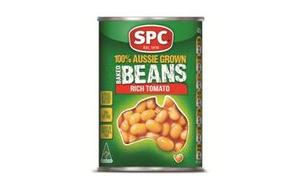
SPC Ardmona has partnered with farmers and the local industry to grow more navy beans in order to produce a new product called SPC 100% Aussie Grown Baked Beans.

The Coca-Cola Amatil-owned company, which has struggled to compete with cheap tinned fruit imports, says the move aims to help Australian farmers struggling to compete with cheap foreign imports.

SPC says the Queensland town of Kingaroy, which used to be famous only for its peanuts and being the home of former premier Joh Bjelke-Petersen and his wife Flo, is now Australia’s navy bean capital.

SPC is also sourcing Aussie beans from Atherton in far north Queensland and the Riverina district in NSW, two other regions that have suitable conditions for growing quality beans.

The tomato sauce that binds the beans contains vine ripened tomatoes from the Goulburn Valley in Victoria.

“Eating products containing overseas sourced beans means you’re not supporting our Aussie farmers struggling to compete with cheap foreign imports. There has never been a more important time than now to support Australian grown and Australian made, just as SPC is doing with its 100% Aussie Grown Baked Beans,” said the company.

The company has recently called on the government to put temporary tariff protection in place against cheap tinned fruit imports after falling sales led it to cancel contracts with 60 fruit growers, a request that the Productivity Commission is currently investigating.

SPC 100% Aussie Grown Beans are now available in Woolworths, Coles and Independent supermarkets.

Packaging News

As Australia’s packaging reform agenda moves closer to implementation, APCO is strengthening its leadership and operational capability, appointing Tom Key as COO to help drive the systems and delivery capability needed for the next phase of reform.

Federal ministers yesterday convened an urgent industry roundtable on plastics supply chain pressures, placing packaging reform and domestic recycling capability firmly at the centre of discussions around Australia’s food security and manufacturing resilience.

The Australian Beverages Council has renewed calls for urgent national packaging reform, saying global supply disruptions highlight the need for stronger domestic recycling and harmonised EPR.