


Consumer group Choice is calling for an overhaul of kilojoule labelling on alcoholic drinks after finding a lack of consistency.
Improved labelling, Choice says, would help consumers watching their intake to compare their beverage options more easily.
Choice spokesperson Katinka Day said there was inconsistency in the industry between food labelling and alcoholic beverage labelling, and health ministers needed to take action.
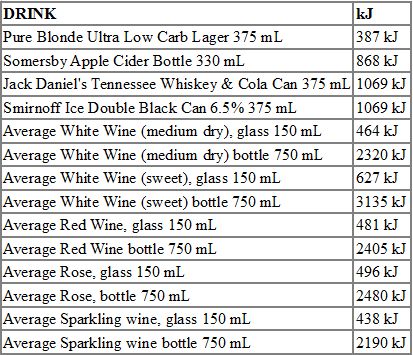
“While consumers can find out the amount of kilojoules they’ll be consuming if they bite into a hamburger or a packet of chocolate biscuits, a loophole in Australia’s food regulation means alcohol companies are exempt from providing this information," she said.
"It doesn’t make sense that there’s one rule for a can of coke and another for a pre-mix can of coke and whiskey."
Australia’s health and food ministers recently agreed to launch a public consultation on kilojoule labelling in alcoholic beverages early next year.
Kilojoule labelling would reveal that a can of Smirnoff Ice Double Black has almost two and a half the kilojoules as a glass of medium dry white wine, for example.
“Our current labelling means that consumers can’t make side-by-side comparisons of alcoholic beverages and we can’t rely on alcohol companies fixing this themselves," Day said.
Lion Corporation displays nutritional information on its beers, but not its ciders, which are generally higher in kilojoules, Choice found.
Carlton and United Breweries publishes the kilojoule content of its beer and cider products but not for 22 of the 28 spirits listed on its website.


