


Brands are embracing premiumisation as a way to make customers feel valued and special as consumers turn to high-value products.
A study by GlobalData has found that consumer purchasing behaviours are moving towards quality goods at higher price points, and brands are releasing new premium and exclusive products to capitalise on this market.
Premium products often feature luxury packaging design, with the alcohol sector increasingly including elements such as foiling and embossing on labels.
According to Shagun Sachdeva, consumer insights analyst at GlobalData, the Asia-Pacific region’s population growth; rapid urbanisation; and rising disposable incomes in emerging economies give it massive potential for premiumisation.
“High on the list of consumer preferences are high quality products with a luxurious feel and the products that offer greater convenience. The consumers also prefer to have products that pass stringent safety standards and are produced with environmentally sustainable practices.
“Adapting to the changing demands and values of today's modern shoppers, brands have realized the need to upgrade to premium offerings. Manufacturers have their eyes set on the premium market and targeting the middle-to-high income segment through host of value-adds to lure people to upgrade,” said Sachdeva.
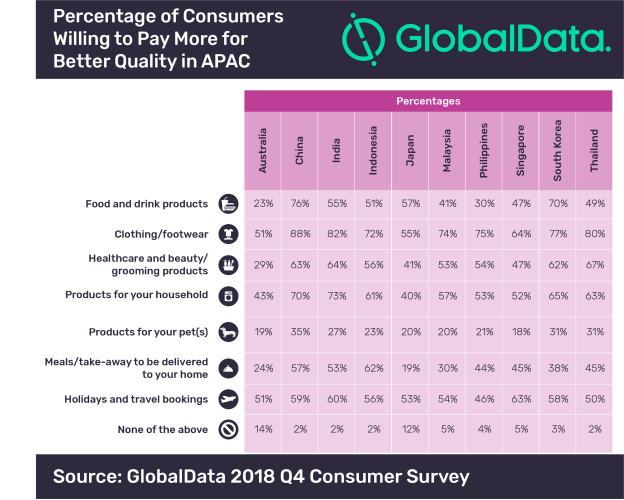
Clothing and footwear, as well as holiday and travel bookings, are the two biggest premiumisation markets in Australia, with 51 per cent of consumers willing to pay more for better quality; household products are next, at 43 per cent. Healthcare and beauty is at 29 per cent, while food and drink products rate at 23 per cent.
“While premiumisation is not a new trend to be seen, what has changed is the motivation behind consumers’ purchasing decisions,” said Sachdeva. “Premiumisation, at its core, is all about priorities and what matters to the consumers.
“Brands that are quick to know the consumers’ priorities can capitalise on creating their USPs and clear difference between commanding a premium and becoming a commodity.”


